St. Pete vs. Tampa: What’s the Difference When Buying a Home?
By Greg Atamyildiz, Licensed Real Estate Associate Salesperson | Last Updated:
If you’re relocating to Florida and looking at homes in Tampa or St. Petersburg, there’s a good chance you’ve used the two names interchangeably at some point.
I hear questions like these from relocating buyers every week:
- Is St. Pete part of Tampa?
- What is Tampa Bay, exactly? Is it a city or a region?
- Can I live in St. Pete and commute to Tampa?
- Is St. Pete the same as St. Pete Beach?
- And is it better to buy a home in Tampa or St. Pete?
These are all fair questions. The short answer is that St. Petersburg and Tampa are two separate cities, in two different counties, on opposite sides of Tampa Bay. The longer answer is what this article is about.
Here’s how I walk relocating buyers through it.
In this article
- Is St. Pete part of Tampa?
- What is Tampa Bay? Is it a city or a region?
- What county is St. Petersburg in? What county is Tampa in?
- Why St. Pete feels more built-out: the Pinellas Peninsula
- Are Tampa and St. Pete connected by a bridge? How far apart are they?
- Can you live in St. Pete and commute to Tampa?
- What’s the difference between Tampa and St. Petersburg as cities?
- Why the neighborhood can matter more than the city name
- Is St. Pete closer to the beach? Is St. Petersburg the same as St. Pete Beach?
- What kind of homes will you find in Tampa and St. Pete?
- Is St. Pete more expensive than Tampa? Property taxes, insurance and fees
- Which has more flood risk, Tampa or St. Pete?
- So, is it better to buy a home in Tampa or St. Pete?
Is St. Pete part of Tampa?
No. St. Petersburg and Tampa are two separate, independently governed cities within the larger Tampa Bay region.
Buyers relocating from outside Florida often use “Tampa” and “Tampa Bay” interchangeably, but they aren’t the same thing. When someone tells me they’re “moving to Tampa,” what they often mean is that they’re considering communities anywhere in the Tampa Bay region, which could include St. Petersburg, Clearwater, the Gulf beaches or the suburbs north and east of Tampa.
That’s an important distinction to sort out early, because it changes where we look and what we look at.
What is Tampa Bay? Is it a city or a region?
Tampa Bay is not a city.
The name refers to two things. First, it’s the body of water, the large bay that opens onto the Gulf of Mexico. Second, it’s the broader metropolitan region surrounding that water. The U.S. Census Bureau defines the Tampa–St. Petersburg–Clearwater metro area as Hillsborough, Pinellas, Pasco and Hernando counties, home to roughly 3.2 million people as of the 2020 census.
So St. Petersburg is in Tampa Bay. Tampa is in Tampa Bay. So are Clearwater, the beach towns and dozens of surrounding communities. But none of them is “Tampa Bay,” and St. Petersburg is not inside the City of Tampa.
What county is St. Petersburg in? What county is Tampa in?
St. Petersburg is in Pinellas County. Tampa is in Hillsborough County, and it’s the county seat.
This matters more than most relocating buyers expect. County and municipal governments set their own property tax millage rates, run their own permitting and building departments, and provide different services. Utilities, trash collection, stormwater fees and even the process for pulling a permit on a renovation can differ depending on which county, and which city, a home sits in.
Practical takeaway
When you compare two homes on opposite sides of the bay, you’re comparing two counties, not just two addresses.
Why St. Pete feels more built-out: the Pinellas Peninsula
St. Petersburg sits on the Pinellas Peninsula on Florida’s Gulf Coast. Pinellas County is bordered by the Gulf of Mexico to the west and Tampa Bay to the east, and it’s the most densely populated county in Florida, at roughly 3,348 people per square mile.
That geography creates a much more compact, built-out environment than many relocating buyers expect. There’s simply less land. In practice, that explains several things buyers notice when they start touring:
- Lot sizes in many St. Pete neighborhoods tend to be smaller than in Tampa’s newer suburbs.
- Vacant land is scarce, so much of the “new” housing is infill construction or a rebuild on an existing lot.
- Large master-planned communities with brand-new homes are far more common on the Hillsborough and Pasco side of the bay than in Pinellas.
- Established neighborhoods with mature trees and older architecture make up a large share of the housing stock.
None of that is good or bad. It’s just a different development pattern, and it’s one of the biggest reasons the two cities feel different on the ground.
Are Tampa and St. Pete connected by a bridge? How far apart are they?
Yes. The two cities sit on opposite sides of Tampa Bay, and three main crossings connect Pinellas County to Hillsborough County:
- Howard Frankland Bridge carries I-275 across Old Tampa Bay. It’s about three miles long and is the main link between St. Petersburg and Tampa’s Westshore area and downtown.
- Gandy Bridge carries US 92, farther south, connecting the Gandy area of St. Pete to South Tampa.
- Courtney Campbell Causeway carries SR 60, farther north, connecting Clearwater to Tampa near the airport.
- Sunshine Skyway Bridge is the other famous span, but it runs south from St. Pete toward Bradenton and Manatee County, not to Tampa.
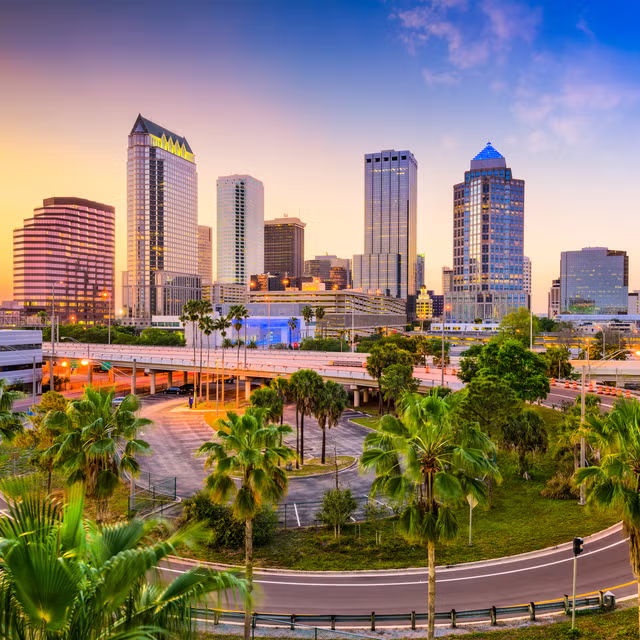
Downtown to downtown, St. Petersburg and Tampa are roughly 22 miles apart by road, about 30 minutes without traffic. Depending on where you’re starting and ending, getting from one city to the other can be relatively quick, but you are physically crossing Tampa Bay to do it, and that crossing is where traffic concentrates.
Can you live in St. Pete and commute to Tampa?
Many people do, and plenty commute the other direction too.
But this is where I slow buyers down. Distance on a map doesn’t tell you what your commute will look like. Commute times across the bay can vary dramatically depending on exactly where you live, where you work, which bridge or route you’re taking, and the time of day.
A home in northeast St. Pete near the Howard Frankland on-ramp with a job in Westshore is a very different daily experience from a home in south St. Pete with a job in New Tampa, even though both are “St. Pete to Tampa.”
My advice
Evaluate the specific home-to-work commute, at the hour you’d actually drive it, not the distance between “Tampa” and “St. Pete.”
If you’re considering a cross-bay commute, drive it on a weekday morning before you write an offer. It’s the cheapest due diligence you’ll ever do.
What’s the difference between Tampa and St. Petersburg as cities?
Both are major metropolitan cities, but they offer distinctly different environments.
Tampa is geographically larger, at roughly 114 square miles compared with about 62 for St. Petersburg, and it contains numerous employment centers: downtown, the Westshore business district, Port Tampa Bay, MacDill Air Force Base, the University of South Florida area and more. It has historic neighborhoods, dense urban districts and large suburban-style areas all within the city limits, and it blends into fast-growing suburbs in every direction that isn’t water.
St. Petersburg has its own major downtown, with a waterfront, a walkable arts and restaurant scene and its own employment base. It also has historic neighborhoods, waterfront communities and quieter suburban-style areas, but the whole city has a distinctly coastal setting. You’re never far from the water, and the Gulf beaches are a short drive west.
Tampa reads as a big, spread-out metro with many centers.
St. Pete reads as a compact coastal city with one strong downtown.
Why the neighborhood can matter more than the city name
The lifestyle difference isn’t simply “Tampa vs. St. Pete.” There can be dramatic differences from one neighborhood to another within the same city.
In St. Pete, downtown, the Historic Old Northeast, Historic Kenwood and the neighborhoods farther north or west can provide completely different experiences. The same is true in Tampa, where downtown, Hyde Park, South Tampa, Seminole Heights, Davis Islands and the outlying areas each have their own character.
Two buyers could both say they want to live in Tampa, or both say St. Pete, and actually be looking for completely different lifestyles. The things that really drive the decision tend to be:
That’s why I’d rather start with how you want to live than with which city name you’ve heard more often. You can browse every area we serve on our communities page.
Is St. Pete closer to the beach? Is St. Petersburg the same as St. Pete Beach?
Generally, yes, St. Pete puts you closer to the Gulf beaches than most of Tampa does. But St. Petersburg and St. Pete Beach are not the same city.
St. Pete Beach is its own incorporated city on a barrier island in the Gulf, and it has been since 1957. Treasure Island, Madeira Beach, Indian Rocks Beach and the other Gulf beach communities are likewise separate municipalities strung along the Pinellas coast, with their own governments, their own rules and, in many cases, their own insurance and flood considerations.
This trips up relocating buyers constantly. If what you actually want is to walk to the Gulf, we need to be looking at the beach towns. If you want a city neighborhood with the beaches twenty minutes away, that’s St. Petersburg. Those are two different searches.
What kind of homes will you find in Tampa and St. Pete?
The housing stock differs both between and within the two cities.
Depending on the neighborhood, you’ll encounter 1920s bungalows, mid-century ranches, waterfront properties, downtown high-rise condos, townhomes, newer infill construction and luxury estates. Tampa, with more land, has far more of the large newer-construction subdivisions, particularly as you move north and east. St. Pete’s inventory leans more heavily toward established neighborhoods and infill rebuilds.
A buyer looking specifically for newer construction may need to approach the search differently from someone prioritizing historic architecture or an established, walkable neighborhood. Neither is harder to find, but they’re often not in the same places.
Is St. Pete more expensive than Tampa? Property taxes, insurance and fees
This is the question I get most, and the honest answer is that it has to be evaluated property by property.
Two similarly priced homes, even within the same city, can have very different total monthly ownership costs. Here’s what can differ:
| Cost | Why it can differ between two homes |
|---|---|
| Property taxes | Florida taxes are based on assessed value times the combined millage of the county, city, school board and special districts. Pinellas and St. Pete set different rates than Hillsborough and Tampa. And because of the homestead exemption and the Save Our Homes cap, the seller’s current tax bill is often not what yours will be after the sale resets the assessment. |
| Homeowners insurance | Age of the home, roof age, construction type, wind mitigation features and distance to the coast all move the premium, sometimes by thousands of dollars a year. |
| Flood insurance | Depends on the specific property’s flood zone and elevation. It may be required by the lender, optional or not needed at all, and the cost ranges widely. |
| HOA or condo fees | Can be zero in an older neighborhood or hundreds to thousands per month in a condo or gated community. Condo reserves and assessments deserve their own review. |
| CDD fees | Community Development District assessments are common in newer master-planned communities, especially on the Hillsborough and Pasco side, and they’re added to the property tax bill. |
| Municipal services | Water, sewer, stormwater, trash and reclaimed-water charges vary by city and county. |
So rather than asking “is St. Pete more expensive than Tampa,” ask what will this specific home cost me per month, all in? We run that number for every property our buyers seriously consider, before they fall in love with the kitchen.
Which has more flood risk, Tampa or St. Pete?
Flood exposure shouldn’t be generalized by city.
Both Tampa and St. Pete contain properties with dramatically different flood and storm-surge considerations. A home a few blocks from the bay and a home on higher ground a mile inland can be in completely different flood zones, with completely different insurance requirements, even though they share a zip code.
What to check on every property
The FEMA flood zone, the elevation, the evacuation zone, past claims and what the lender will require for insurance.
You can look up any address on the FEMA Flood Map Service Center, and we review it together as part of our due diligence. Don’t assume one entire city or one side of Tampa Bay has the same level of exposure. It doesn’t.
So, is it better to buy a home in Tampa or St. Pete?
There’s no universal answer, and anyone who gives you one without asking questions first isn’t really helping you.
Choosing between Tampa and St. Pete should start with the lifestyle and the property you want, not simply the city name. The questions I’d want answered are:
- Where will you work, and how often will you actually drive there?
- How often do you want to be at the Gulf beaches?
- How much do you value walkability versus space and privacy?
- What type and age of home do you prefer, and what lot size?
- What flood exposure and insurance cost are you comfortable with?
- What’s your total monthly budget, taxes and insurance included?
Those answers may point you toward a particular neighborhood on either side of Tampa Bay. For some buyers, that’s a bungalow in the Old Northeast. For others, it’s new construction in Wesley Chapel or a townhome in South Tampa. The city name is the last thing we settle, not the first.
Ready to Talk About Where You Fit?
Whether you’re relocating from out of state or moving across the bay, you don’t need to figure out Tampa versus St. Pete from a map.
The Legacy Group has offices in both Tampa and downtown St. Petersburg, and we work both sides of the bay every day. Reach out, start a property search, or call (813) 777-0121 and we’ll help you narrow it down to the neighborhoods that actually fit how you want to live.
Because the question isn’t really “Tampa or St. Pete?”
It’s “Which neighborhood, on which side of the bay, fits the life I want?”
Sources
- U.S. Census Bureau metro definition and population, via Tampa Bay area (Hillsborough, Pinellas, Pasco and Hernando counties; 3,175,275 residents, 2020 census).
- Pinellas County, Florida (most densely populated county in Florida, about 3,348 people per square mile; peninsula bordered by the Gulf of Mexico and Tampa Bay).
- Howard Frankland Bridge (carries I-275, about three miles, St. Petersburg to Tampa; Gandy Bridge carries US 92; Courtney Campbell Causeway carries SR 60).
- Tampa, Florida and St. Petersburg, Florida (county, land area and 2020 census population: Tampa 384,959 on about 114 square miles; St. Petersburg 258,308 on about 62 square miles).
- St. Pete Beach, Florida (separate incorporated city in Pinellas County since 1957; renamed from St. Petersburg Beach in 1994).
- Florida Department of Revenue, Property Tax Information for Taxpayers (millage, homestead exemption and the Save Our Homes assessment cap).
- FEMA, Flood Map Service Center (address-level flood zone lookup).
Geographic and population figures are as of the sources above and will change. Commute times, taxes, insurance and flood designations are property-specific. For the current picture in a neighborhood you’re considering, check our latest Tampa Bay articles, our buying and relocating FAQs, or contact us directly.

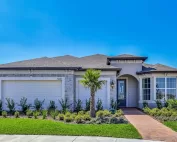
St. Pete vs. Tampa: Your Questions Answered
Still deciding between Tampa and St. Pete?